
Blog · Cost Guide · Published June 2026
Houston Home Addition Cost (2026 Guide)
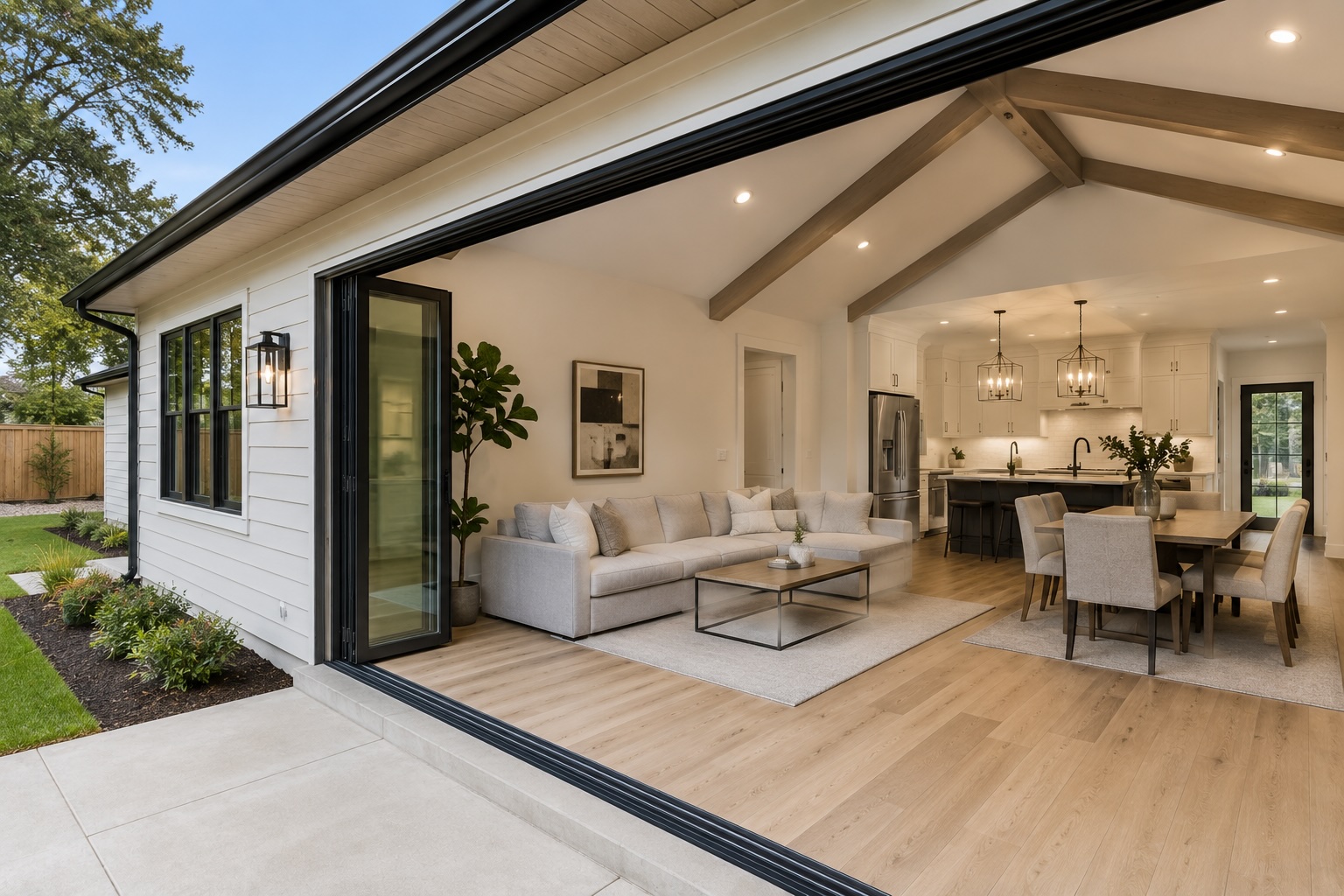
A home addition is one of the biggest investments a homeowner makes in their property. Here's what additions actually cost in Greater Houston in 2026 — by type, and what the big cost drivers are within each category.
Rough cost-per-square-foot bands
In Greater Houston in 2026, additions generally fall into one of these bands per square foot of new conditioned space. These numbers cover labor, materials, foundation, framing, mechanicals, finishes, permits, and a typical level of finish:
- Garage conversion (slab and walls already exist) — $80-$150 per sf
- Room addition (single-story, new foundation) — $200-$350 per sf
- Primary-suite addition (single-story, includes plumbing) — $250-$400 per sf
- Second-story addition (over existing footprint) — $300-$500 per sf
These are starting bands. They go up with finish level, foundation conditions (tear-out of existing concrete, soils that need pier-and-beam), and complexity of tying into the existing house.
1. Garage conversion — $25,000 to $70,000
The cheapest addition type because you're not starting from dirt. The slab and the walls are already there. You're:
- Insulating the walls and ceiling
- Replacing the garage door with a framed wall + window or door
- Running HVAC into the new space (extending existing ducts or adding a mini-split)
- Drywall, paint, flooring, trim
- Possibly adding a bathroom (adds $10-15K)
Common uses: home office, mother-in-law suite (with bath), gym, hobby room. Usually 6-10 weeks.
2. Room addition — $60,000 to $150,000
A single-story extension off the existing house — new slab, new framing, tied into the existing roof line. Most common scopes:
- Family room expansion (250-400 sf)
- Sunroom or four-season room
- Extra bedroom (with or without its own bath)
Cost drivers:
- Slab work — soil conditions in Magnolia/Conroe sometimes require pier-and-beam instead of slab, which adds $8-15K
- Roof tie-in — matching the existing roof line cleanly takes more time than people expect
- HVAC sizing — extending an existing system that's already at capacity means an upgrade or a mini-split, adding $5-12K
- Permit timeline — usually 4-8 weeks in Montgomery County before you can start; budget for it
Usually 12-16 weeks from permit issuance to walkthrough.
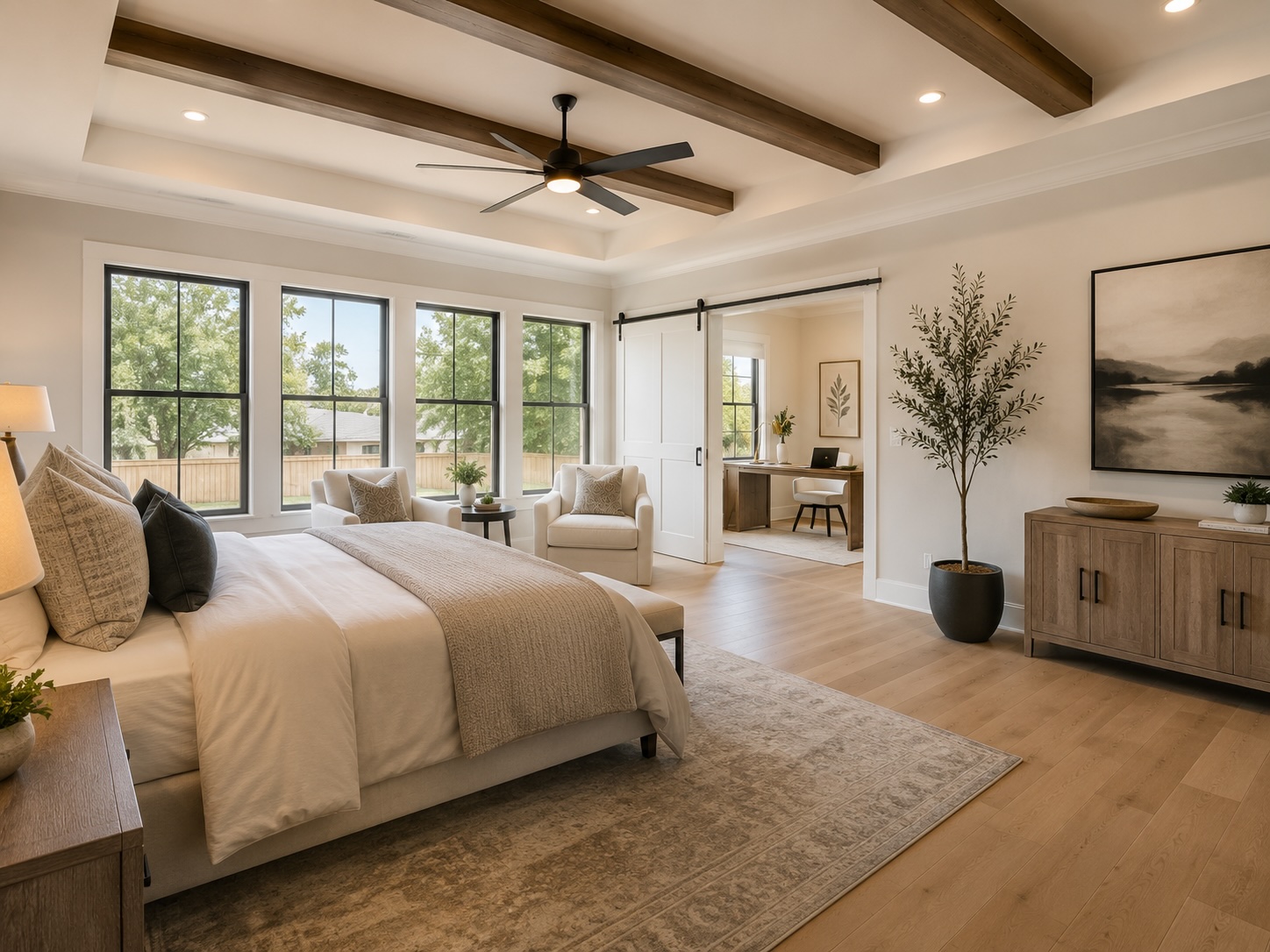
3. Primary-suite addition — $90,000 to $200,000
A room addition that includes a full master bath and walk-in closet. The plumbing load is the main driver above a regular room addition:
- New plumbing supply + drain lines run to the addition
- Sometimes a new water heater (or tankless extension)
- Tile shower with waterproofing
- Double vanity, separate toilet room
- Walk-in closet with millwork
Usually 14-20 weeks. Finish level is where the range really moves — a builder-grade primary suite vs. a curbless walk-in shower with custom millwork is a $40-60K spread on the same square footage.
4. Second-story addition — $150,000 to $400,000+
The most expensive type, for two reasons: structural engineering, and the impact on the existing house during construction.
- Structural engineer required to verify the existing foundation and framing can carry the new load
- Foundation reinforcement often needed (additional piers, footings)
- Roof removal on the existing footprint to extend up
- Temporary weather protection over the open house (the most expensive part of summer storms during a build)
- Staircase installation — has to come out of existing first-floor square footage
- Full mechanicals for the new floor (HVAC zone, electrical sub-panel, plumbing)
Usually 6-9 months. Often homeowners need to live elsewhere during the work, which adds rental costs to the total.
Hidden costs people forget
- Architectural drawings + engineering — $3K-$15K depending on scope
- Permit + plan review fees — $1K-$5K depending on jurisdiction
- HOA architectural review — most Houston-area HOAs require it; budget time, not money
- Utility upgrades — sometimes the electrical service panel needs upgrading to handle the new load ($3-8K)
- Landscaping repair after construction — equipment damages yards. Budget $2-5K to put it back.
- Furniture / finishes in the new space — easy to forget until the build is done
When does it make sense vs. moving?
Rough rule of thumb: if the addition cost is less than 30% of the home's current value, and your lot supports it, an addition is usually the better financial move than a move-up purchase. Above that ratio, the math gets harder because you may not recoup the full cost in resale value. But many homeowners aren't optimizing for resale — they're optimizing for "I want my kids in the same school district for the next 15 years," and that's a perfectly good reason to add on.
Ready to scope yours?
Every addition is different — the only way to land on a real number is to walk your house, look at the lot, and talk through what space you actually need. Veritas Builders offers free walkthroughs across Magnolia, The Woodlands, Conroe, and Greater Houston.