
Blog · Process Guide · Published June 2026
What to Expect During a Whole-Home Renovation

A whole-home renovation is the most disruptive thing you can do to a house short of tearing it down. Here's a realistic month-by-month walkthrough of what happens, what tends to surprise homeowners, and how to keep your life functional during the build.
Whole-home renovations in Greater Houston typically run 4 to 9 months from permit issuance to final walkthrough, depending on scope. A 2,400 sf home being taken back to studs and rebuilt with new mechanicals, finishes, and a kitchen reconfiguration usually lands at the 5-7 month mark.
Month 0: Pre-construction (the stuff before "construction" starts)
Before any demolition, two things have to happen:
- Plans + engineering — drawings done, structural engineer's stamp on anything load-bearing
- Permits — submitted, plan review, issued. In Montgomery County this is usually 4-8 weeks. In incorporated cities (Houston, Conroe), it can be longer.
This is also when you make most of your selections — cabinets, tile, fixtures, appliances, paint, flooring. The more decisions made BEFORE day one, the smoother the build. Decisions made mid-build are where delays come from.
Many homeowners under-budget this phase emotionally. It feels like nothing is happening for 8 weeks. It is — your contractor is ordering materials, scheduling subs, and getting permits in line so day one actually starts on day one.
Month 1: Demolition + roughs
Walls come out. Old flooring comes up. Cabinets, fixtures, and finishes are removed. Then the trades come through one at a time, in order:
- Framing changes (new openings, headers, beams)
- Plumbing rough-in (drain lines first, then supply lines)
- Electrical rough-in (boxes, wire runs)
- HVAC rough-in (ductwork or mini-split lines)
Then inspections — one for plumbing, one for electrical, sometimes one for framing. Each one has to pass before drywall goes up.
What surprises homeowners: how much volume the demo creates, the constant truck traffic, and how loud framing is. If you're living there during this month, plan to be out during weekdays.
Month 2: Drywall + finishes
Drywall hung. Three coats of mud, sanded between. Texture sprayed (knockdown is standard in Texas). Then primer.
This is also when tile work starts on bathrooms and the kitchen backsplash, and when cabinet boxes arrive on site.
What surprises homeowners: how much dust drywall sanding creates, even with sheeting. Your "clean" rooms aren't clean — they have a fine drywall dust layer that takes weeks to fully clear out after the build.
Month 3: Cabinets, counters, fixtures
Cabinet install (usually 1-2 weeks). Then countertop template, fabrication, install (another 1-2 weeks while the template is being cut at the shop). Then plumbing fixtures, sinks, faucets.
Lighting goes in, switches and outlets get their cover plates, doors get hung.
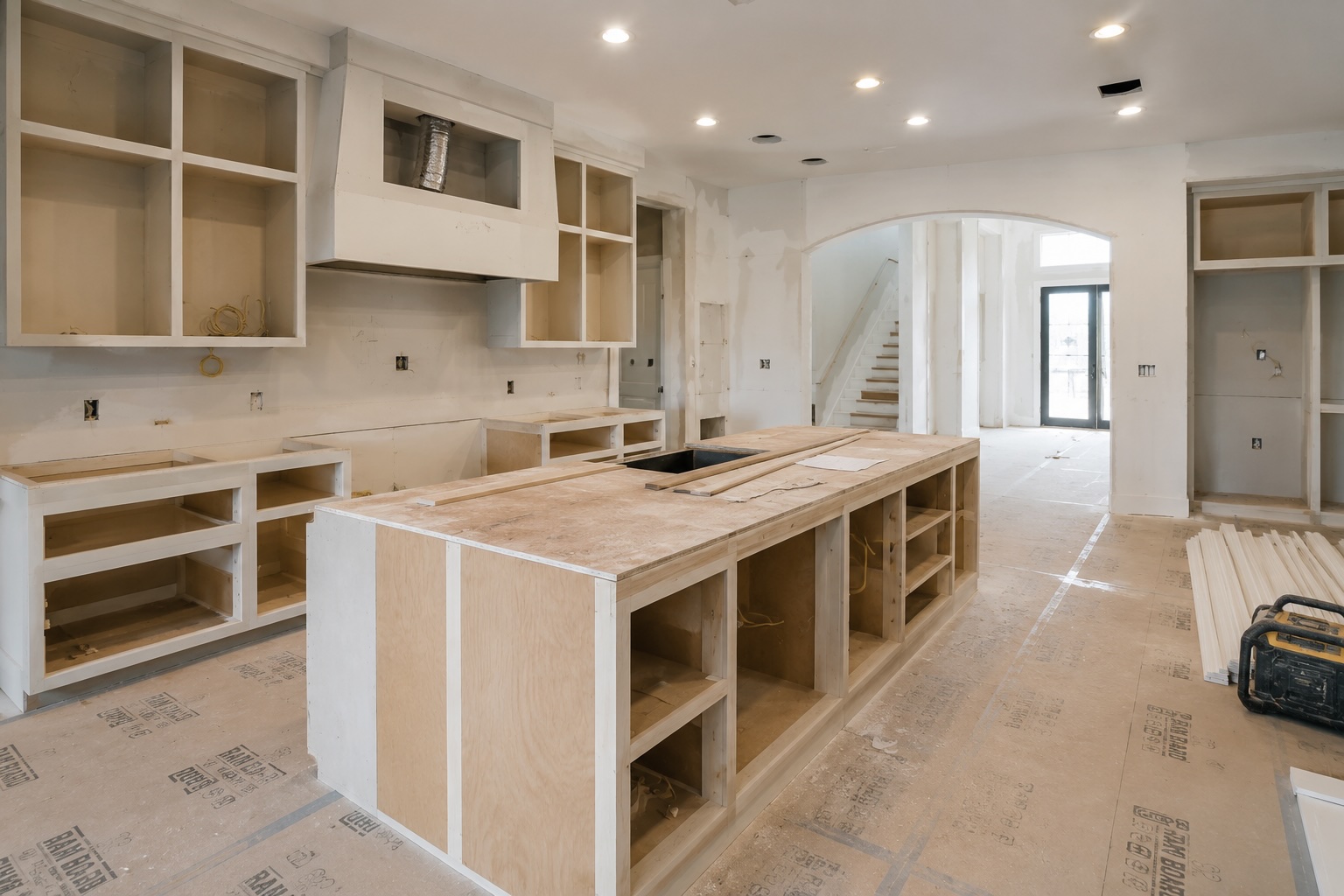
Month 4: Flooring + finish work
Flooring is usually one of the last things in to avoid damage from other trades. Hardwood or LVP goes in, tile floors get grouted and sealed.
Then baseboards, casing, crown molding, paint touch-up, and all the small things that make a house feel finished.
Month 5: Punch list + walkthrough
You walk every room with the project manager. Every small thing — a paint touch-up, a slightly off cabinet hinge, a switch that's slightly crooked — gets written down. The crew comes back through to fix every item. Then you walk it again.
This phase usually takes 1-3 weeks and is where the difference between a good contractor and a bad one shows most clearly. A good contractor fixes everything without complaint. A bad one starts arguing about what was "really" in scope.
Surprises that aren't surprises (because they happen on almost every project)
- Hidden damage in the walls. Soft spots in framing, old plumbing that needs replacement, electrical that doesn't meet current code. Budget a 10-15% contingency for things found behind drywall.
- The schedule will slip 1-3 weeks. Almost always. Materials get backordered, an inspection gets pushed, a sub has a family emergency. Build that buffer into your life planning.
- Decision fatigue. By month 3 you've made 200 small decisions and you're tired of choosing. Make the big decisions early, when you're fresh.
- The final 10% takes 25% of the time. Punch lists, small finishes, getting the inspection signed off — the home stretch always drags. It feels like the work has stopped. It hasn't, it's just less visible.
How to stay livable during the build
- If it's a kitchen + multiple bathrooms, seriously consider renting somewhere for the worst 2 months. The marginal cost of rental for 60 days is small vs. the marginal cost of family stress.
- If you're staying, negotiate which rooms get cleaned daily and which can stay dusty until the end. A clean bedroom and bathroom is non-negotiable.
- Set up a temp kitchen — microwave, hot plate, mini-fridge in the garage or laundry room. Eating out for 4 months is expensive and exhausting.
- Schedule one weekly site walkthrough with your project manager at the same time each week. It keeps everyone aligned without you hovering every day.
- Don't watch the work happen for the first 4 weeks. It looks worse before it gets better. Trust the process.
Considering a whole-home renovation?
Veritas Builders specializes in residential remodels and renovations across Magnolia, The Woodlands, Conroe, and Greater Houston. We'll walk your home with you, talk through realistic scope and budget, and write up an honest line-item estimate.